

Considering the particle size of coal is crucial in understanding and optimizing various aspects of its utilization, especially in processes such as classification, crushing, and milling. The particle size of coal plays a significant role in determining its combustion efficiency, handling characteristics, and suitability for different industrial applications. This article relates a brief overview of the importance of coal particle size in these processes:
1. CLASSIFICATION
Coal classification involves separating coal into different size fractions based on particle size. This process is essential for various applications, such as in coal preparation plants where the goal is producing coal with specific size ranges for optimal combustion or industrial use.
- Thermal Coal is classified based on its rank, calorific value, sulfur content and moisture content. It is helpful to have the rank, moisture and CV for power generation and industrial processes. Other components, such as trace elements and sulfur, are also important for industrial processes that control emissions.
- Coking Coal (Metallurgical Coal): It is classified based on its coking properties, including its ability to form a cohesive mass when heated. Coking coal is further divided into various ranks, such as prime coking coal and medium coking coal, depending on its quality.
- Gasification Coal: Some industries utilize coal for gasification processes to produce syngas, which is used in the production of chemicals and fuels. The classification of coal for gasification considers its reactivity and gasification potential.
- Household Coal: For residential and commercial heating purposes, coal is classified based on its size and heating properties. Different sizes, such as lump coal or fine coal, may be preferred for specific heating appliances.
2. crushing
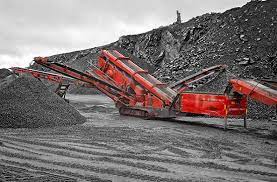
In this process, coal particles experience size reduction, and the efficiency of this operation is influenced by the initial particle size. The coal mining process is pivotal in determining the size distribution. Effective crushing is indispensable for enhancing the combustibility of coal, improving its reactivity during combustion (the finer the particle, the higher the surface area), and facilitating its handling in diverse industrial processes. The choice of suitable crushing equipment hinges on the intended final particle size and the distinctive characteristics of both the coal and its contaminants. For selecting crushin equipment you should consider:
a. Feed Size and feeding mechanism
b. Particle Size and shape Requirements
c. Coal Type and Hardness.
d. Moisture Content.
e.Capacity Requirements.
f.Crushing Efficiency, maitenance and operating costs

3. MILLING
In coal preparation for combustion or other industrial applications, milling further reduces the size of coal particles through grinding. Once the coal reaches a 50mm top size, it becomes imperative to diminish particles under mesh 200 to ensure thorough combustion in a PC boiler; in a CFB boiler, achieving a reduction under 10mm may prove beneficial. The particle size distribution achieved during milling significantly influences combustion efficiency and the coal’s behavior in subsequent processes. Coal quality assumes a critical role in successful milling, encompassing factors such as:
- Hardness and Abrasiveness.
- Moisture Content.
- Grindability.
- Ash Content and composition
- Pyrite Content.
- Particle Size Distribution.
- Density.
- Flammability and Explosion Risk.
Various types of mills, such as ball mills, roller mills, and hammer mills, are used for coal milling, each offering different capabilities for achieving specific particle size distributions.

https://www.babcock.com/home/thermal/combustion-and-fuel-systems/pulverizers/